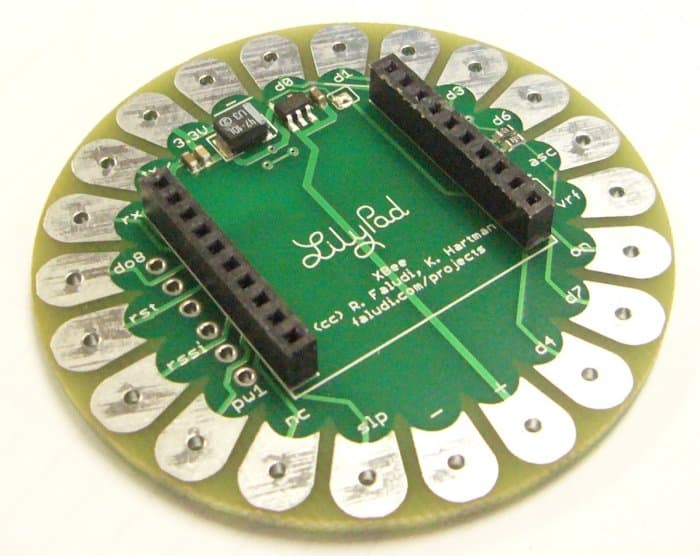
Kate Hartman and I will be teaching a hot new class in Wireless Wearables using the LilyPad XBee. It is offered through downtown Brooklyn’s hacker space, NYC Resistor on Sunday, December 14th from 2-6 p.m. The price of the class includes your own brand-new LilyPad XBee board, an XBee radio and all needed soft circuit materials. The class description explains all:
Get ready to explore the delights of mutual connectivity with the soon-to-be released XBee LilyPad! This class will introduce the communication and construction techniques necessary to create wireless wearables. We’ll start by learning how to communicate using XBee radios, including digital, analog, input and output modes along with an overview of other useful features. Once we’ve made contact, we’ll translate our circuits onto fabric, learning how to make flexible, durable, and attractive connections between components using conductive textiles and threads. By the end of the class, we’ll have our soft circuits conversing wirelessly and you’ll be ready to create your own clothing, toy or tapestry that talks!
The price is great and space is limited. Sign up here!

Wearable radios are coming for your clothes! The LilyPad XBee sew-on ZigBee boards just headed out for manufacture. We finished testing the final green prototype version, nudged in a few improvements and about four weeks from now they’ll be commercially available.
Pricing and source to be announced when the boards go live. For now, we can tell you they’ll definitely be purple.

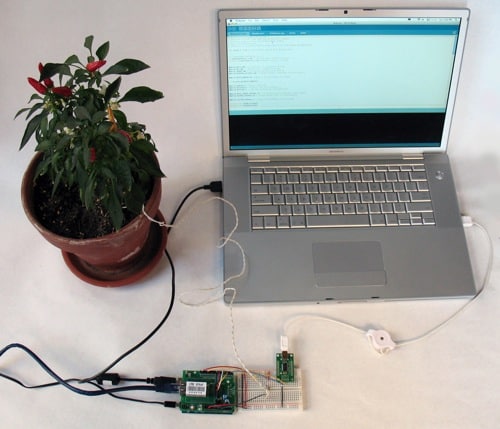
The November 2008 issue of Wired Magazine just hit the stands. It features an article by Clive Thompson about open-source hardware that includes Botanicalls, with a picture of our new Botanicalls Kit. The article focuses on Arduino with great quotes from our friends at NYCResistor, where I’ll be co-teaching a class later this year. Look for more cool Botanicalls news in the next few weeks.

Botanicalls in Wired

Recently created a page in the projects area where I can post simple Arduino functions that I frequently reuse. There’s my standby for blinking a light along with code for buzzing a buzzer, smoothing some output over time, having an LED blink out a version number and a modification of the map() function that handles larger positive numbers. These should be handy for students who are starting to clean up their code with functions, or anyone avoiding wheel reinvention.

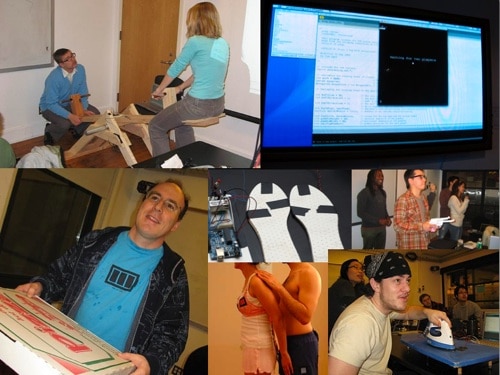
I gave a talk on Sociable Objects yesterday at Microsoft’s Social Computing Symposium. to show all the great work around socially active physical computing at ITP. There was a live feed of the conference on O’Reilly Radar, but of course that’s done now so we’ll have to wait for Microsoft Research to publish talks. In the meantime, a few people asked for my materials so here are the slides to my presentation. It was great to rub elbows with so many interesting and influential collegues. Thanks to Tom Coates for asking me to speak, and to Microsoft’s Lili Cheng and RIT’s Liz Lawley for inviting me!
Update: The talk was posted by Chris Pirillo.

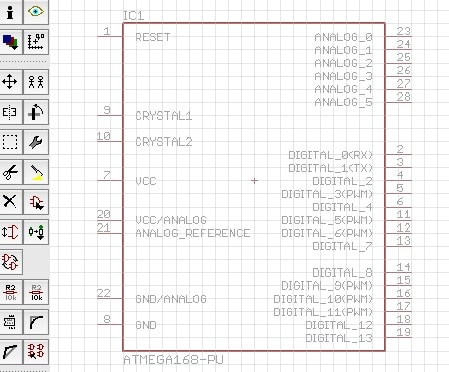
The EAGLE Layout Editor is a great way to design custom printed circuit boards for Arduino-based electronics projects. However, while Arduino uses the ATMEGA168 and ATMEGA8 microcontrollers from Atmel, the EAGLE libraries I’ve found online don’t use Arduino’s simplified pin labeling.
Therefore, I’ve created a custom Arduino-AVR library for EAGLE with the proper Arduino pin indicators to make it easier to create custom boards like the ones we use for the new Botanicalls Kits and several other projects I’m working on that are not yet public. Download the new Arduino-AVR library here.